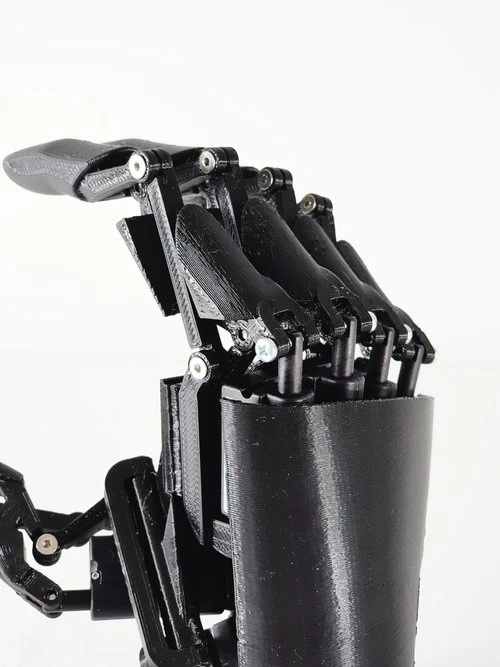
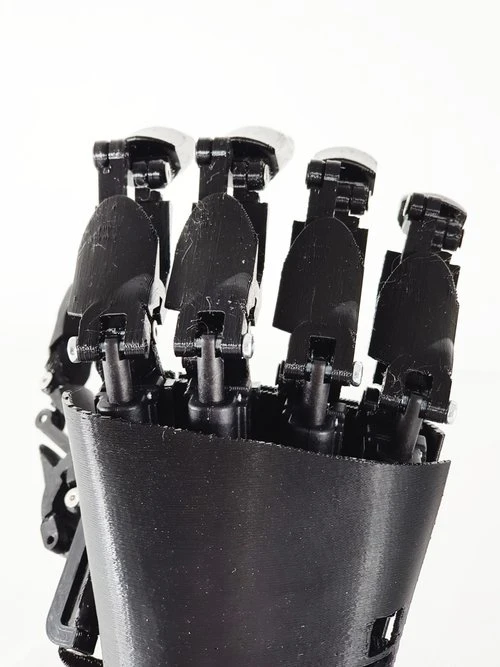
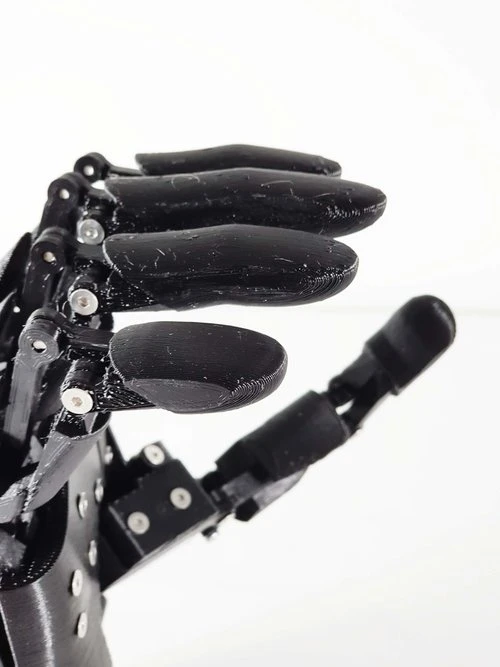
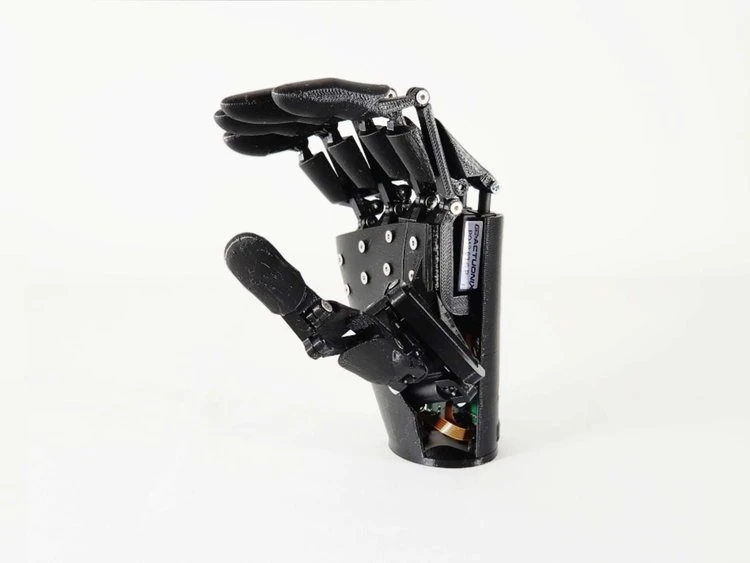
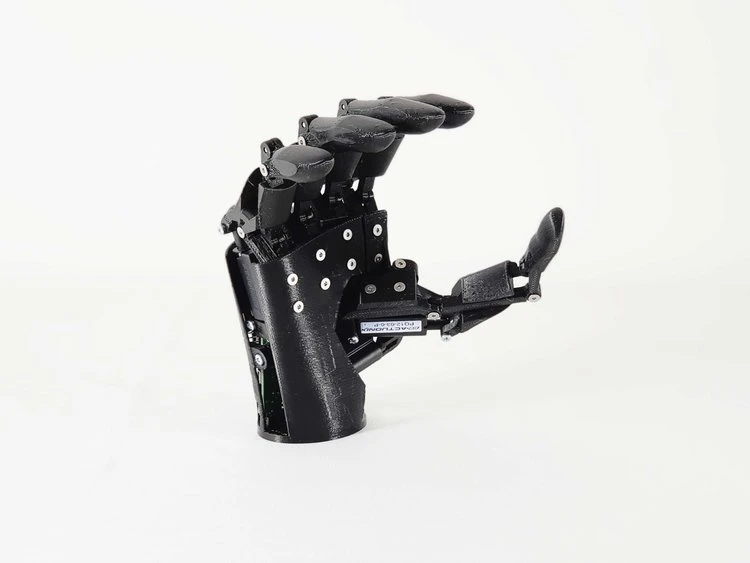
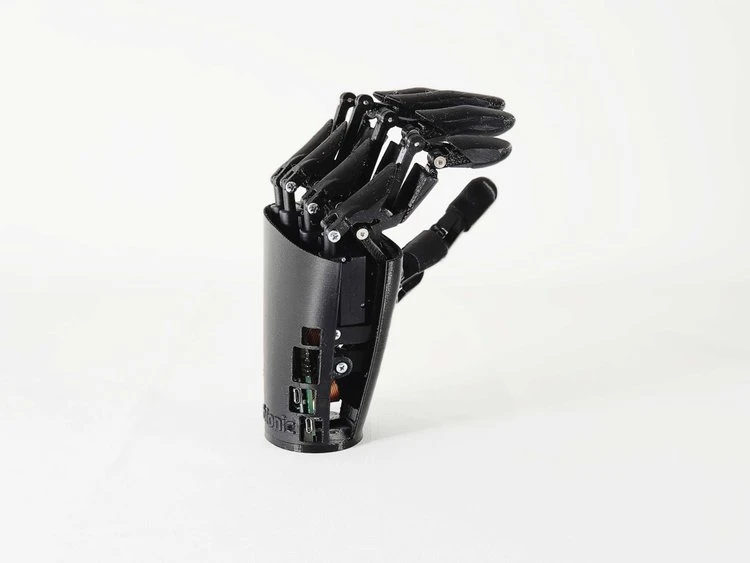
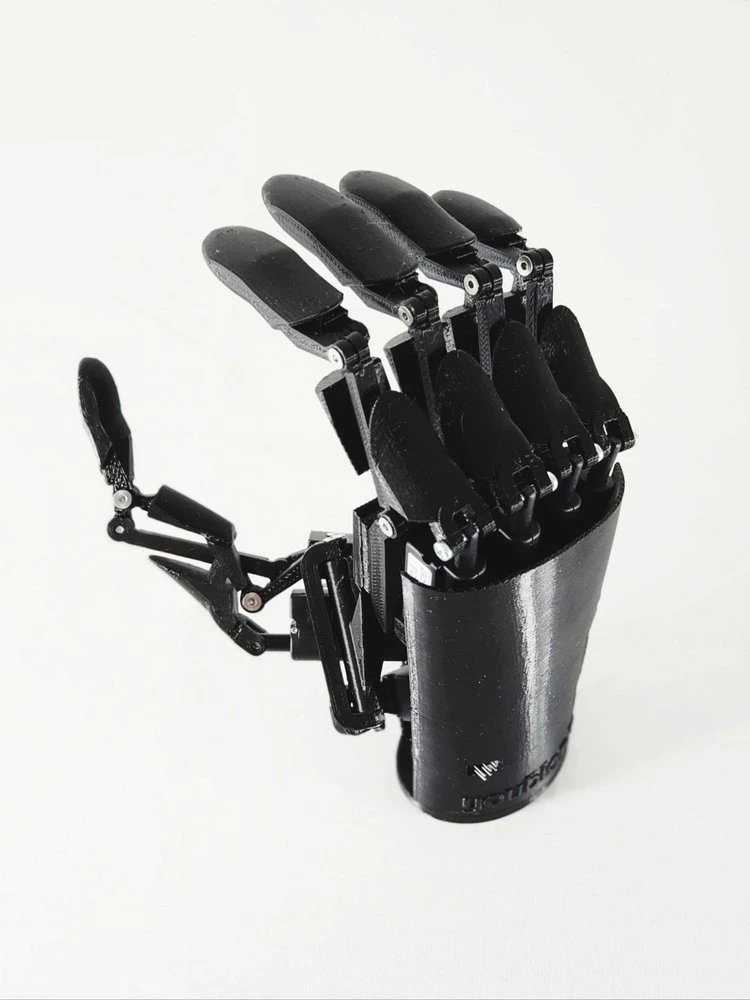
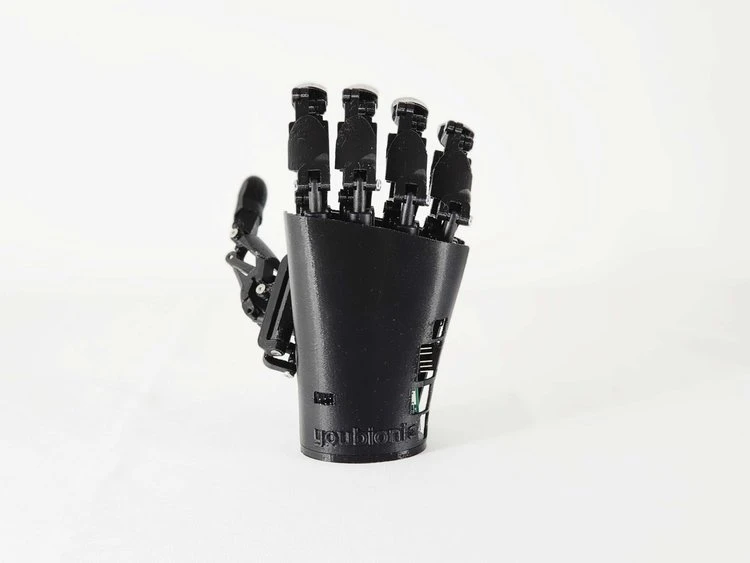
Presenting the new bionic robotic hand with fully automatic features to diable person , this hand will work with nervous systems connected to electrodes.
Signal acquisition
- Peripheral nerve interfaces: Electrodes are placed on the residual nerves in the amputated limb. The user thinks about a movement, and the electrodes pick up the neural signals.
- Muscle signal interfaces (EMG): Electrodes are attached to the skin over muscles or implanted into the muscles. When the user tries to move the missing limb, these muscles will still activate, and the surface or implanted electrodes will record the electrical signals.
- Brain-Computer Interfaces (BCIs): For more direct brain control, electrodes are implanted in the brain's motor cortex. The user can then think about moving their hand, and the electrodes directly capture the brain's signals.
- Surgical rerouting: A surgical technique involves rerouting nerves that once innervated the missing limb to a different, remaining muscle. This muscle then acts as an amplifier for the nerve signals, which can be picked up by myoelectric (EMG) sensors.